

The Days of the Week Are an Ancient Babylonian Musical Score
Following my post last month about the Biblical Jubilee as an ancient time lord system, it seemed like the perfect moment to write about the amazing astro-musical origins of the order of the days of the week.
As far as I can tell, the independent archaeomusicologist Sara de Rose has made an incredible discovery about the origins of the mysterious sequence of the days of the week. Honestly, I have no idea why her discovery isn’t being more widely talked about and celebrated, especially among astrologers and music artists. This entire post is a reiteration of the brilliant work she has done on this topic which you can read about on a UPenn blog here, or watch her explain on YouTube. She also presents the idea in more detail in the peer-reviewed journal Sino-Platonic Papers published by the University of Pennsylvania.
In short, the days of the week are in the order that they are because they are an ancient Babylonian musical score for the major scale.
The first piece of information you need to understand this idea is that the days of the week are each named for and assigned to one of the 7 classical planets. Some of these are apparent in English while others are more obvious in Romance languages:
Sunday (sun), Monday (moon), Tuesday (Martes in Spanish, Mars Day), Wednesday (Miercoles, Mercury day), Thursday (Thor’s day, or Jueves, i.e. Jupiter Day), Friday (Viernes, Venus Day), and Saturday (Saturn day).
This weekday order goes back to ancient Mesopotamia, where the 7 day week was originally standardized. The mystery of this order is that the planets are not in any recognizable order. In most cases, the planets are listed in order of their speed, what’s called Chaldean order: Saturn, Jupiter, Mars, Sun, Venus, Mercury, Moon. However, the week days seem to be a totally random sequence.
What Sara de Rose has discovered is that the order is far from random. If we take that same list of planets and number them in ascending order based on their speed it would be:
1. Moon
2. Mercury
3. Venus
4. Sun
5. Mars
6. Jupiter
7. Saturn
Now if we arrange the planets in the weekday order, the sequence is: 4 1 5 2 6 3 7
This just so happens to be the exact number sequence written on a Babylonian tablet from the 5th or 6th century BCE:

[Tablet CBS1766, Penn Museum Collection]

[Detail of Tablet CBS1766, numbered by Sara de Rose]
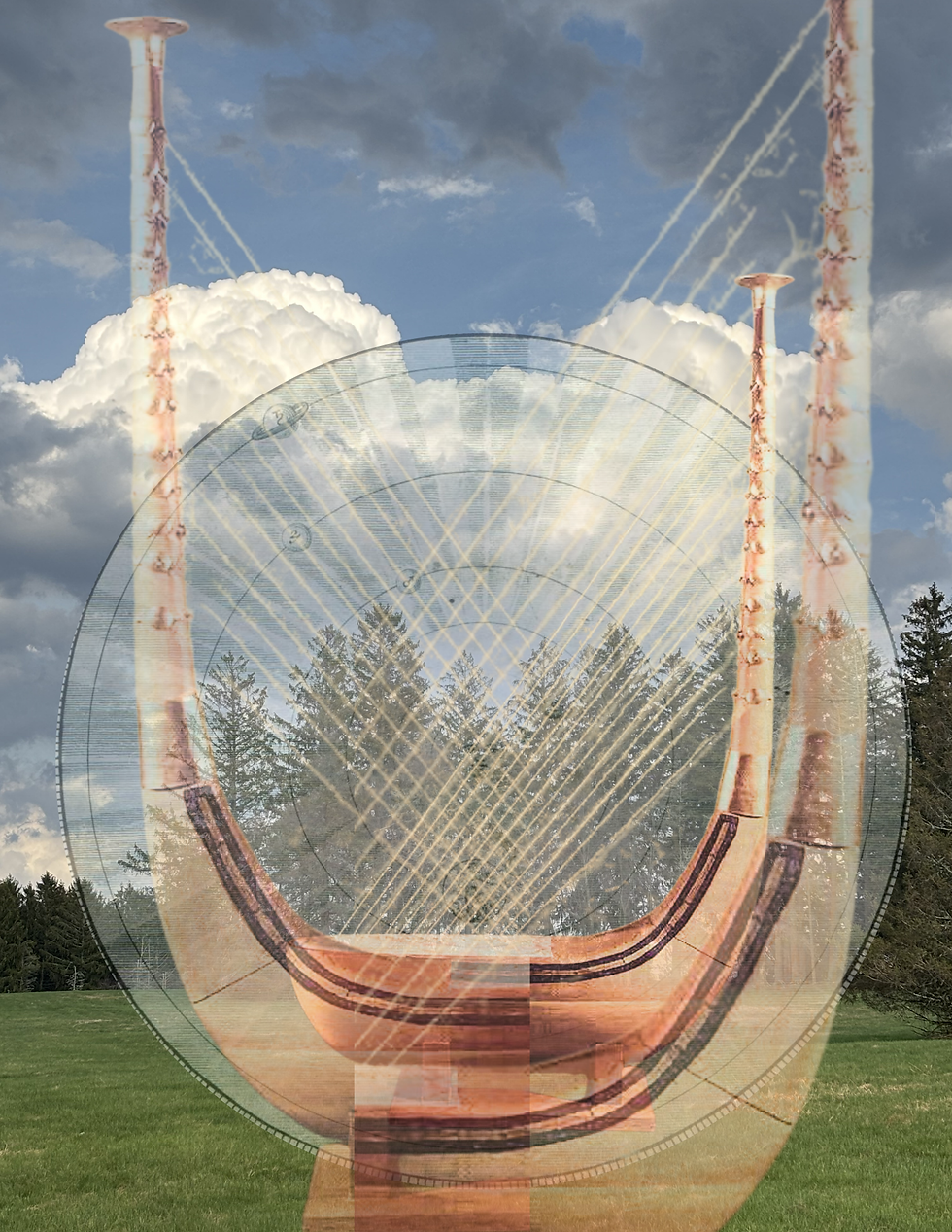
The sequence is written out on the tablet (as you see in de Rose’s image above) and mapped to a 7 pointed star. Scholars believed it was purely an astronomical tablet until they discovered that it correlates perfectly with the strings you would play on a Babylonian lyre to produce a major scale.
This same order can be observed in one of the foundational music theory tools, the circle of fifths.
One can begin at any note on the circle of fifths and follow the same sequence to produce a major scale in that key. I’ve numbered the circle of fifths below beginning with the note C. The major scale in C goes: C, D, E, F, G, A, B, C
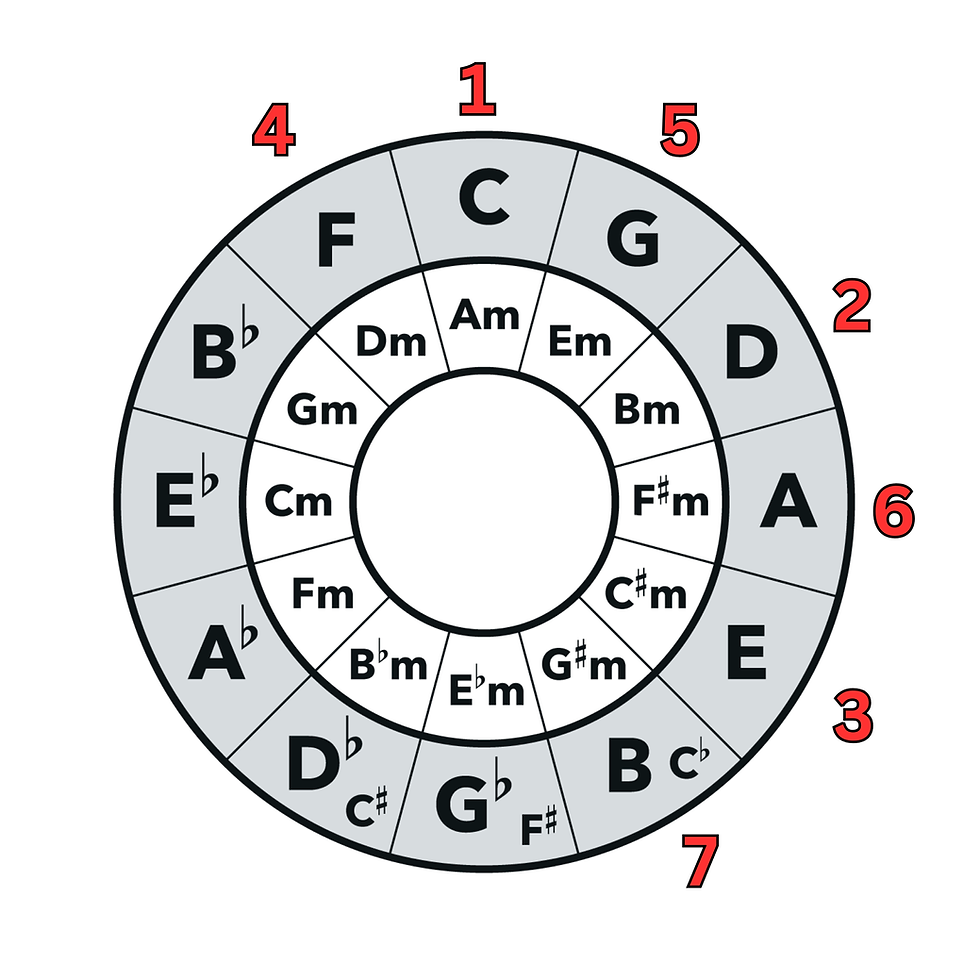
Notice anything? It simply can’t be a coincidence that the major scale, mapped onto the circle of fifths, produces the identical sequence to the planetary days of the week. It’s mindblowing that this isn’t common knowledge, but I have no doubt that what we’re looking at is a score for playing the major scale, a set of instructions in astrological code that would be decipherable by anyone who knows the Chaldean order of the planets.
As de Rose discusses in both her blog post and video, we have historical references to the musical origins of the week that date back at least to the 3rd century CE, and this order played a meaningful symbolic role in the Mithraic mystery rites. The Roman philosopher Origen cites the 1st century philosopher Celsus in ascribing the order of the week to “musical reasons, quoted by the Persian theology.” As De Rose explains, Celsus “was documenting a ritual of the Mithraic Mysteries in which initiates climbed a ladder (Latin ‘scala’, the root of the musical term ‘scale’) of seven rungs, where each rung was associated with a classical planet, in the order 4,1,5,2,6,3,7. According to Celsus, this ladder represented the journey of the soul through the planetary spheres."
Though this beautiful, esoteric sequence was passed down in the mystery traditions, and was ultimately absorbed by the Catholic church later on, at some point we lost the key to this brilliant code. Thankfully, the musical score itself was preserved in the order of the week itself!
I love to think of each week as a rite where we pass through the realm of each planet, day by day, and as we do, we ascend the musical scale. It’s also incredibly exciting to think of the musical potential in this formula, now that we know this ancient assignment of each planet to a note in the sequence of a major scale.
Does this all blow your mind as much as it did mine? I’d love to hear your thoughts and any musical or astrological ideas spurred by this illuminating research. And again, I’m only the messenger here, all of the credit for this unbelievable observation goes to Sara de Rose. I hope you all will support and follow her work!


