BDSM and Ancient Aspect Theory: Adherence, Overcoming, Domination, and Enclosure
Updated: Sep 9

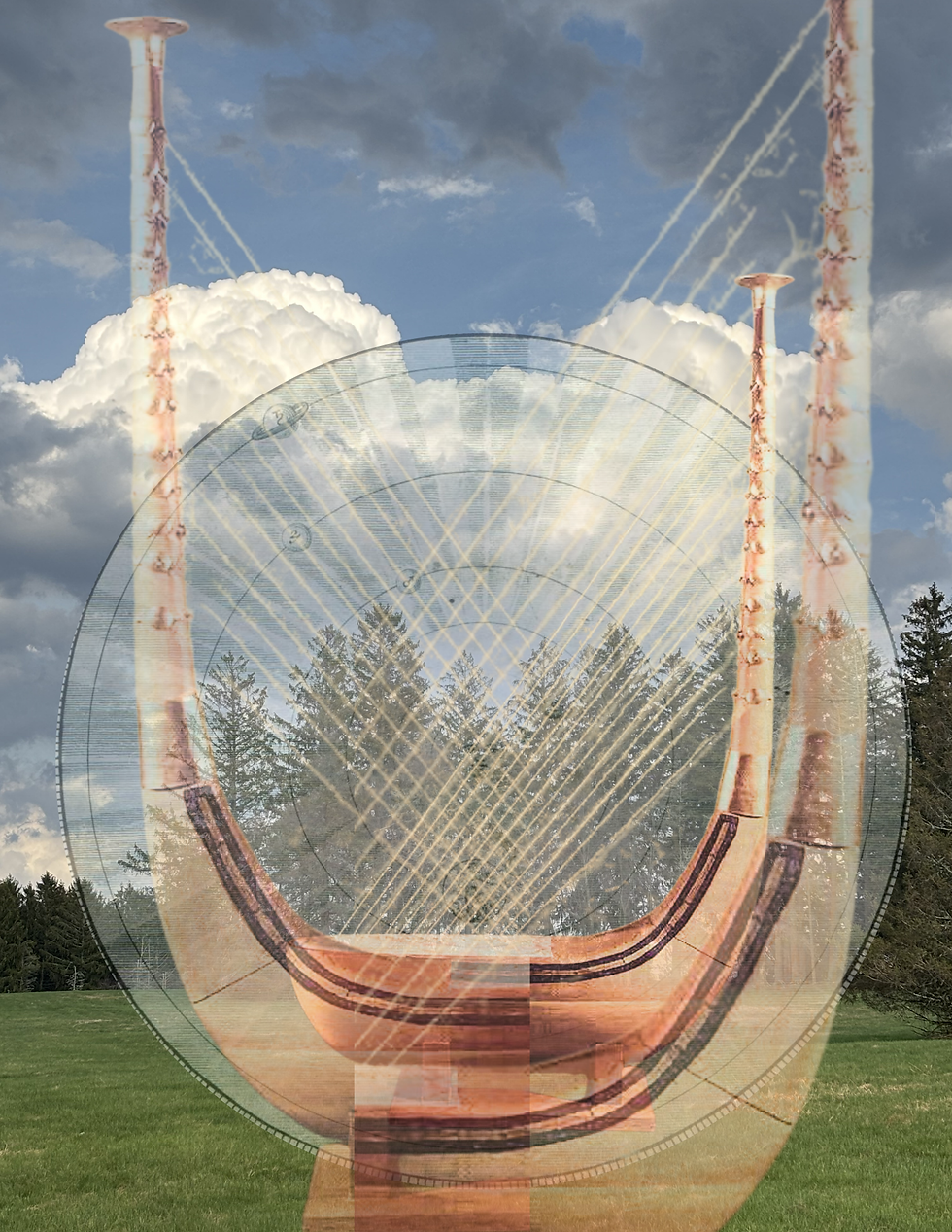
[Image: Two photographs from “O Portfolio” by Catherine Opie / Diagram of planetary motion]
“You're not overpowering someone, you're melding with someone. To overpower somebody is wrong, but to meld with somebody is a pleasure bonding which… if you crank up the juice with S/M, you get more enjoyment out of it.” Bob Flanagan quoted in Bob Flanagan: Supermasochist by Andrea Juno and V. Vale
“Adherence [Kollesis] is the closest kind of relationship. It points to the deepest kind of intimacy between two planets; the two merge into one, as if in sexual union.” Demetra George, Ancient Astrology Vol 1.
“There’s a causality to care, a reason for its existence, and this—the because of care—is pain. Why else would care be necessary? How else would we know to rush it in? Perhaps it’s not that we should try to build care around ourselves. Perhaps it’s that the architecture of care is already built by pain, and the task becomes to inhabit this place, to feel free to move around in all of its rooms.”Johanna Hedva, "Can I Hit You?", How to Tell When We Will Die
Why is it that Hellenistic aspect doctrine and BDSM have a shared vocabulary? And how can these linguistic echoes teach us how to better read someone’s most intimate relationships in their natal chart?
If you’ve spent some time with Hellenistic astrology texts you may have noticed that the language can get pretty kinky. Just look at Circumambulations Through the Bounds, an entire predictive technique based around the relationship between “bound lords” and “sub lords.”
Nowhere is the language of kink more obvious than in the words used to describe the special aspect relations between planets. In preparation for my upcoming summer class at Kepler College, The Language of Ancient Aspect Theory, I’ve been studying these terms more deeply, analyzing the original Greek words used in the primary source texts alongside the most common translations of those terms into English, and comparing those to the actual choreography of the planets involved in each technique.
It finally sank in the other day that the major aspect relations correlate perfectly with BDSM, each one clearly tied to one of the subversive sexual practices that make up the acronym. Before I theorize about why this correlation exists or what it says about both ancient and contemporary society, I want to briefly profile the most important of these special aspect relations and explain which kink(s) they correlate to.
B D S M is Bondage, Domination, Sadism, and Masochism and their complementary aspect relations are Adherence, Overcoming, and Enclosure. For each one I’ll very briefly explain how to identify that particular astrological condition in a chart and then look at how both the language and the astrology/astronomy mirror their respective kinks.
These special aspect relations are so important because they have the potential to cause either bonification or maltreatment — essentially the best and worse things that can happen to a planet in ancient astrology.

[Image: Performance artist Aom suspended by hooks, Mexico City, 2025. Photo by Ada Navarro]
Adherence = Bondage
In the quotes at the top of this article, Demetra George is talking about the special aspect relation called adherence while Bob Flanagan is discussing S&M, but the language they use is almost identical.
Adherence [kollesis] is a degree-based relationship between planets that can be dramatically helpful or harmful, depending on which planet is “adhering” to which other planet.
When two planets are in conjunction, and the faster planet is applying to the slower planet within 3 degrees or less, then it is adhering to that slower planet. The faster moving planet will be at a lower degree of the zodiac sign than the slower planet, and that slower planet has to be the very next planet that the faster one will make contact with. Saturn cannot adhere to any other planet because he is the slowest; the moon can adhere to any other planet; Mercury can adhere to any planet other than the moon; etc: Moon > Mercury > Venus > Sun > Mars > Jupiter > Saturn.
If a planet adheres to a malefic, it hurts the adhering planet. If a benefic adheres to another planet, it improves the condition of that planet. If a benefic adheres to a malefic, it hurts the benefic and helps the malefic (more about this dynamic in the S&M and enclosure section below). If you imagine the planets in motion, the faster moving planet is coming up from behind the slower one and latching onto it.
Mars is excessively hot and Saturn is excessively cold; a planet in adherence with a malefic is like someone grabbing onto something that is either painfully hot or brutally cold. In fact, in many shibari sessions, performances, and rituals, once someone is bound and/or suspended, intense heat or cold is introduced to amplify the experience, like dripping hot wax on their skin, or dunking their head in ice cold water.
One example of someone with a dramatic example of adherence in her natal chart is Gypsy Rose Blanchard: Venus adheres to Mars in Virgo in the 12th house, the benefic planet of love and beauty grasping onto the planet of violence and pain, in the house that rules hospitals, illnesses, and secrets.

In Gypsy’s life, this experience of adherence was one of involuntary bondage to her abusive mother; at the same time it reflects the literal violence that her boyfriend used to free her from captivity by stabbing her mother to death (Venus improves Mars’ condition, while Mars hurts Venus). Gypsy and Nicholas (her boyfriend) also engaged in and documented their BDSM role play, in which Gypsy alternated between the dominatrix Demona and a submissive “slave” to Nicholas. Just to be clear, this is obviously not an example of a positive, consensual BDSM relationship, since Gypsy felt coerced and wasn’t able to consent. Not everyone has the privilege of encountering malefic adherence in a space of safety and play. Still, there is much more that could be said about the potency of Gypsy using the tool of roleplay to take on the character of a dominatrix after living the absolute inverse experience of complete disempowerment her entire life.
Adherence can also happen by aspect rather than conjunction, but this is called “connection” [sunaphe].
When I see adherence in a natal chart, I immediately start thinking about attachment—is the kind of attachment or adherence in their chart something that makes their life easier? Does the chart show symbiotic interdependence or excess attachment and codependence? Are they attached to things that are antithetical to their happiness and what? What kinds of people and things does this person “adhere” to and does that benefit the person whose chart it is, or does it benefit those they adhere to, or both (or neither)?
If the correlation between the terms adherence and bondage wasn’t obvious enough already, it becomes undeniable when we analyze the original word kollesis (κόλλησις). According to the ancient Greek lexicon, the term is the noun form of the verb “bonding, joining, or glueing.” Adherence is literally bondage.
Of course the act of consensually being tied up or restrained is a way to play with the limits of one’s agency and control. If you’re the one being bound, you’re willingly surrendering control to someone who you trust. If you’re the one restraining a partner, you experience what it's like to take responsibility for another person’s body, safety, and decision making for that period of time. Whether consciously or unconsciously, these dynamics are at play in our intimate relationships, and our attachment and dependency needs to be consciously navigated with the person or people we’re with sexually and romantically. There are tons of much less pleasurable ways that we experiment with bondage and control if we’re not openly and consensually negotiating those limits with partners we trust.
The spiritual equivalent of bondage could be called “faith,” whether we define it as adherence to a doctrine, or complete trust in another being (god, person, or animal).

[Image: Still from the film Nesting in Rapid Floods: Qworkaholics Anonymous II, by Vidisha Fadescha with performer Kinkinella.]
Overcoming = Domination
The link between the D in BDSM and the aspect relation of overcoming is the most explicit of any of these comparisons. The name “overcoming” on its own could already be associated with domination, but there’s even a special form of overcoming—epidekatēsis—that is literally translated as “domination.” In the ancient system, one planet can “dominate” another, and they’re in a relationship of domination together.
Overcoming isn’t too complicated, but check out my blog post about it or my part of this panel discussion at Kepler Colllege if you want a more full explanation. When any two planets are in aspect, one of them overcomes the other. The planet that is behind in zodiacal order overcomes the planet that is ahead (again, if you want to know how to tell which is ahead and which is behind, read the full blog post). The overcoming planet is able to impress its own nature and significations onto the planet it overcomes.
When a planet overcomes another planet by the superior square, it's literally called domination. The original word epidekatēsis means something along the lines of “being in the 10th position” (because the overcoming square is the 10th sign from that planet in zodiacal order). So Aries dominates Cancer. Libra dominates Capricorn. Scorpio dominates Aquarius.


[Zodiacal domination key. Cardinal: Cancer dominates Libra; Libra dominates Capricorn; Capricorn dominates Aries; Aries dominates Cancer. Fixed: Taurus dominates Leo; Leo dominates Scorpio; Scorpio dominates Aquarius; Aquarius dominates Taurus. Mutable: Virgo dominates Sagittarius; Sag dominates Pisces; Pisces dominates Gemini; Gemini dominated Virgo.]
Much like adherence, whether overcoming is wonderful or terrible or mixed depends on who exactly is dominating who. Is it benefic Venus overcoming us, infusing us with pleasure, beauty, and love? Or is it Saturn, overcoming us with domineering restrictions? Maybe you actually love being overcome by Saturn! That depends on the person and the chart. But the premise here is just that the overcoming planet is the dominatrix, and the overcome planet is the sub. You contain both of these archetypes! Everyone has planets overcoming other planets in their natal chart.
Deeper study of the dynamic of overcoming in your unique chart can guide us toward particular kinds of experimentation with domination, whether we’re the ones dominating or being dominated. We can seek out a dom with the qualities of our overcoming planet, or we can step into that role and play it ourselves. Consider how your unique planet-sign-house combos might suggest particular kinds of dom/sub/switch play for you. What kind of dom is Mercury in Aquarius? Maybe they’re really into electricity and want to dominate using a neon wand. Maybe that overcoming Aquarius Mercury is in the 9th house, so they want to dress up like the Pope while they shock you. What is a 5th house dom like in comparison to a 12th house one? The possibilities are endless, and each can open up ways of experiencing the energy of domination in ways that are playful and consensual, something particularly valuable for those of us who struggle against all of the involuntary experiences of domination that are part of life in an authoritarian society.

[Image: Restraint sculpture from Queer Time: Kinships & Architectures by Vidisha Fadescha for Party Office.]
Sadomasochism = Enclosure
Enclosure is when two planets corner another planet between them (by bodily conjunction or aspect ray).
In the chart example below, the moon is enclosed by benefics. Jupiter at 15° Cancer sends a ray to 15° Aries; the moon is at 16° Aries; and Venus is at 17° Aries. No other planet gets in the way, bodily or by aspect, so the moon is enclosed between the two benefics. Benefic enclosure protects and uplifts a planet; its one of the best things for a planet’s condition (what’s called “bonification”). Inversely, being enclosed by malefics (trapped between Mars and Saturn) is one of the most damaging circumstances for a planet to be in—what’s called “maltreatment.”

The aspect condition of enclosure sounds at first like it might relate more directly to restraints and cages, but it also beautifully expresses the interplay between sadism and masochism. This is particularly true when the benefics and malefics are both involved. In Ancient Astrology Vol 1. (the best secondary source for learning these aspect relations), Demetra comments on this dynamic in which a benefic is enclosed by malefics, and the benefic improves the condition of the malefic at the same time as the malefics damage the benefics’ condition: “There are some circumstances in life where the victim is moved or forced to protect the abuser.”
Of course, in consensual sadomasochism, there’s (ideally) symbiosis between the masochist who desires humiliation or pain and the sadist who enjoys inflicting it. The act of sexual play can open up the space for us to experience negatively charged, or even traumatic, experiences within a safe context, or to embrace the aspects of ourselves and our desire that we’ve been taught are shameful or should be suppressed. Astrologically, we can think of this as a way of embracing our malefics and remediating our relationship to them, since the malefics rule most things that are rejected by normative society. (I talk more about this idea in my article on Mars and autoerotic asphyxiation, a masochistic kink.)
Why the common language?
These comparisons between aspect relations and BDSM aren’t just a contemporary projection on the ancient material; the language used for kink power play and ancient aspects are so similar because both are ways of describing real relationships of power between people that originate in slavery and debt. In many ancient societies, by entering into debt contracts, even privileged citizens could end up as slaves, and there was deep anxiety among people about whether or not they might become indentured and lose their freedom.
Slavery is the most extreme manifestation of societal power relations (both then and now), but relationships of debt are deeply embedded in every sphere of human society. It’s no wonder then that ancient aspect theory so closely mirrors the language of debt and slavery—or inversely (in the case of helpful aspects) of liberation or protection from those same conditions.
In his brilliant anthropological study of debt throughout human history, Debt: The First 5000 Years, David Graeber shows the incredible degree to which human relationships are based in unquantifiable mutual debts. While quantifiable debts are a fulcrum of exploitation, gift-based relationships between people cannot be reduced to a simple one-to-one exchange. If I give you something invaluable, and later on you give me something else invaluable, we inevitably continue that mutual exchange indefinitely, since our "ledgers" will never be balanced. In contrast, capitalist exchange alienates us from these deep mutual ties by reducing everything to a quantifiable value, even things that should never be commodities. In a purely gift-based economy, I would never want to be out of debt to someone I'm close to because that would essentially mean the end of our relationship of reciprocal care. In using the language of debt, the ancient planetary aspect relations touch on this deep intermingling of people based in mutual care and interdependence, not only predatory debt relationships.
Beyond dynamics of bondage and freedom in human relationships, there is also the matter of fate and the limitations it places on our freedom of choice within our lifetime, and the actual number of years we are allotted to live. We could even say the three fates are the original dominatrices (does Clotho spin shibari rope?). If we look at the planets as gods (as they were understood to be in the ancient worldview), these special aspect relations show the intimate power dynamics between them, and these macrocosmic power relationships are then reflected microcosmically inside of you (and externally in your interpersonal relationships).
I’m constantly trying to think of ways that we can experience the concepts that are embedded in ancient astrology, rather than only thinking about them and dissecting the minutiae of the primary source texts. In BDSM, we’re presented with an incredible opportunity to somatically study the ancient aspect relations and feel rather than think about what ancient astrologers were trying to describe with these planetary relationships. Because BDSM is already a deeply developed practice for experimenting with relationships of power, and because both the ancient aspect material and BDSM are based on the same real societal structures, by experimenting with BDSM we can learn directly and phenomenologically how to apply the ancient technical astrology concepts to contemporary life and chart analysis.
If you have any of the special aspect relations I mention above in your chart, I invite you to think about what kind of kink experiences might correlate with those chart dynamics, and (with partners, friends, or alone) study the sensations and emotions that arise when you actualize that dynamic in erotic play. This is just one of many, many possible experiential approaches to tapping into the deeper meaning embedded in ancient astrological texts.